
- All
- Product Name
- Product Keyword
- Product Model
- Product Summary
- Product Description
- Multi Field Search


Views: 145 Author: Site Editor Publish Time: 2026-07-31 Origin: Site


Selecting a silicone rubber for cable insulation, tubing, seals, or medical components often comes down to more than heat resistance. The material must process cleanly, cure consistently, hold its shape, and stay flexible under the conditions the finished part will face. HTV silicone is one of the common options for these demanding applications, but its name alone does not tell you whether it suits extrusion, molding, outdoor use, or regulated products.
Understanding how HTV silicone rubber is made, cured, and specified helps buyers avoid mismatched grades and choose materials with the right balance of strength, elasticity, durability, and process performance.
HTV silicone rubber begins as a high-consistency compound rather than a pourable liquid. The base is typically a high-molecular-weight silicone gum, combined with reinforcing fillers, processing aids, pigments, heat stabilizers, and curing agents. These ingredients are not minor details, because they influence hardness, tensile strength, tear resistance, elongation, transparency, compression behavior, and processability. A compound made for a flexible tube may need a different balance from one intended for a tight-tolerance seal or a transparent healthcare component.
The formulation also affects how smoothly the material runs through equipment. In extrusion, htv silicone must pass through a die without tearing, excessive swelling, surface roughness, or unstable dimensions. In molding, the same general material family may need different flow, release, cure, and tear properties. A datasheet can show useful numbers, but the final choice still depends on whether the compound fits the intended manufacturing route.
After compounding, the material is shaped before heat turns it into a stable elastomer. Common forming routes include extrusion, compression molding, transfer molding, calendering, and selected injection-related processes for appropriate formulations. During vulcanization, heat activates the curing system and creates a crosslinked network that gives the finished part its elastic recovery. Some grades also require post-curing to improve stability, remove residual volatiles, or meet demanding application requirements.
A simple way to view the process is: compound preparation → shaping → heat vulcanization → post-curing/testing → finished part. Each stage can affect the outcome, so processing quality is not separate from material quality. For cable and tube profiles, GT Silicones offers an extrusion-grade HTV compound with specification factors such as Shore A hardness, tensile strength, elongation, temperature range, solid compound form, and typical vulcanizing temperature. That kind of information helps buyers connect the material description with the way the part will actually be produced.
Temperature stability is one of the main reasons manufacturers choose HTV silicone instead of conventional elastomers. The cured material is valued for retaining flexibility across a wide temperature range, rather than becoming brittle in cold conditions or losing its useful elasticity under heat. That matters for cable insulation near engines, tubing exposed to thermal cycling, seals used around heated equipment, and profiles installed outdoors. When the part must keep working after repeated temperature swings, the material’s resistance to hardening, cracking, and deformation becomes more important than a single room-temperature test result.
Outdoor aging performance also deserves attention. Silicone chemistry gives these materials useful resistance to ozone, UV exposure, and weathering, which helps parts maintain surface integrity and flexibility over time. Moisture resistance supports cable, electrical, and outdoor sealing applications, especially where insulation or dimensional stability is part of the design requirement. These durability requirements explain why thermal stability, weather resistance, electrical insulation, and chemical stability often appear together when buyers evaluate silicone rubber for demanding environments.
Mechanical reliability should be read as a group of related properties, not a single number. Hardness affects flexibility, sealing force, and how the part feels during assembly. Tensile strength helps indicate resistance to pulling, while tear strength matters when a profile, gasket, or tube must survive installation without splitting. Elongation tells the buyer how much stretch the material can tolerate before breaking, and compression set helps predict whether a seal can recover after being squeezed for a long period.
Electrical reliability is another major reason htv silicone appears in cable and insulation applications. Good dielectric behavior, moisture resistance, and thermal stability allow the cured rubber to protect conductors and components under demanding service conditions. Mechanical testing of high-temperature vulcanized silicone materials commonly examines hardness, tensile strength, and elongation at break, which reinforces why these values should be evaluated together rather than in isolation. A soft grade may seal well but tear too easily, while a high-strength formulation may be less suitable for a delicate flexible tube. The best choice is the one whose mechanical profile matches the load, assembly method, service temperature, and expected life of the part.
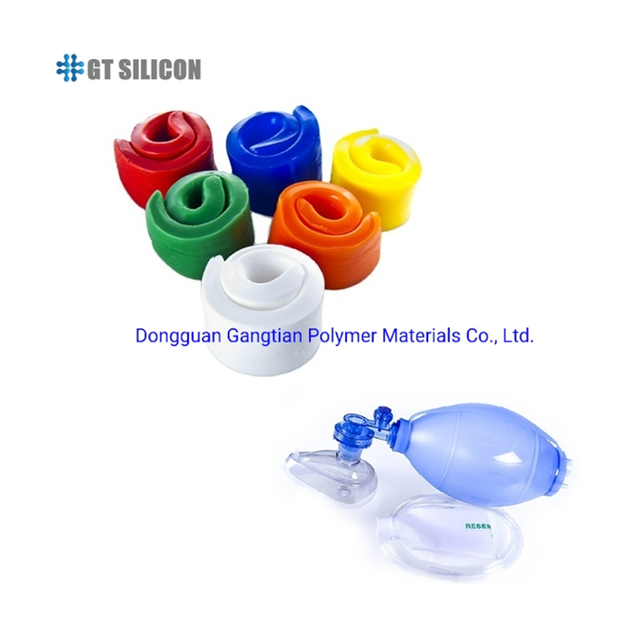
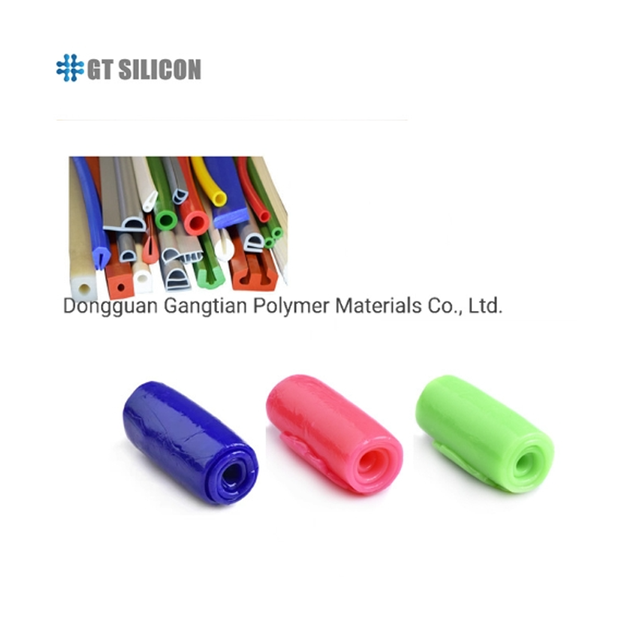
Extruded products are among the most natural applications for HTV silicone because solid compounds can be shaped continuously into tubes, profiles, cable insulation, and hose forms. Stable extrusion helps the manufacturer maintain wall thickness, surface quality, flexibility, and dimensional control. Thermal resistance supports cable and tubing applications exposed to heat, while weather resistance helps profiles and protective parts survive outdoor or industrial environments. For electrical uses, insulation performance and moisture resistance often become as important as mechanical strength.
GT Silicones’ extrusion-grade HTV material is designed for cable and tube profiles, including cable insulation, automotive and aerospace tubing, medical devices, food-grade tubing, and industrial hose.In a blog context, the product works best as an example of how extrusion-focused grades are described rather than as a universal answer for every part. A cable profile, a soft tube, and an industrial hose may all use silicone rubber, yet each one can require a different hardness, tear strength, elongation, color, and cure profile.
Medical and healthcare applications usually require a stricter review than general industrial parts. Transparency may be needed for visual fluid monitoring, while mechanical strength must support handling, assembly, and service without tearing or collapsing. Biocompatibility documentation, sterilization compatibility, traceability, and extractables data can determine whether the material is suitable for a device or healthcare component. Clear tubing, diagnostic components, wearable medical parts, connectors, and pharmaceutical processing components all place different demands on the compound.
High-transparency htv silicone can be relevant when the application requires both clarity and elastic performance. GT Silicones’ medical-grade silicone combines optical clarity, tensile strength, elongation, USP Class VI, ISO 10993-5/10, and autoclave compatibility for medical-product applications. Those details show why “transparent silicone” should never be treated as automatically medical-ready. Documentation and process validation remain essential.
Outside cable and medical use, HTV silicone appears in seals, gaskets, hoses, kitchenware, insulation parts, anti-vibration components, and molded rubber parts. Automotive applications often value heat resistance, compression recovery, and flexibility in crowded assemblies. Food-contact and kitchenware parts may emphasize odor, color, regulatory status, and cleanability. Industrial components may prioritize tear resistance, service temperature, chemical exposure, and long-term dimensional stability.
Application labels can be misleading if they replace grade confirmation. A food-contact material is not automatically suitable for medical use, and a transparent material is not necessarily certified for healthcare applications. Flame-retardant, conductive, high-tear, low-compression-set, and high-clarity grades can differ significantly in formulation and performance. The right question is not simply where silicone rubber is used, but which grade has the evidence and processing behavior required for the specific part.
The first specification question should be “how will the part be made?” rather than “which silicone is best?” Extrusion needs stable output, smooth surface formation, manageable die swell, suitable cure speed, and consistent dimensions. Compression or transfer molding may put more emphasis on mold filling, release, tear resistance during demolding, and cure uniformity. Calendered sheet requires another set of handling and thickness-control expectations.
Process fit often determines whether a promising material works in production. An extrusion-grade htv silicone may perform well in cable insulation or tube profiles but behave poorly in a complex molded component. A molding-oriented grade may deliver good part definition yet fail to provide the continuous processing stability needed for long profiles. Sampling should therefore be tied to the intended equipment, tooling, cure conditions, and quality checks.
Datasheet values are useful only when they are connected to real service conditions. Hardness, tensile strength, tear strength, elongation, compression set, operating temperature, color, transparency, curing system, and post-cure requirements should be reviewed together. Heat exposure, fluid contact, outdoor aging, sterilization, compression load, electrical stress, and expected service life can change which value matters most. GT Silicones’ extrusion-grade product includes a Shore A hardness range of 40–70, tensile strength up to 12 MPa, elongation up to 600%, and a temperature range of -60°C to +250°C, giving buyers a practical framework for early screening.
Requirement | Why it matters | What to ask the supplier |
Forming process | Determines whether the compound can be extruded, molded, or calendered efficiently | Is this grade designed for my exact process? |
Mechanical profile | Balances strength, flexibility, tear resistance, and recovery | What are the hardness, tensile, tear, elongation, and compression-set values? |
Service environment | Heat, fluids, moisture, UV, and sterilization can change performance needs | Has the material been tested under similar conditions? |
Compliance needs | Medical, food-contact, and electrical uses require documentation | Which certificates, test reports, and traceability records are available? |
A common mistake is selecting htv silicone by name alone. The term describes a broad material family, not a finished specification. Two grades can both be heat-vulcanizing silicone compounds and still differ in hardness, filler system, catalyst, cure behavior, transparency, regulatory status, and mechanical performance. A supplier should be able to explain why a recommended grade matches the part geometry, process route, and service environment.
Another error is treating hardness as the full mechanical story. Hardness affects feel and sealing force, but it does not replace tensile strength, tear resistance, elongation, or compression-set data. Transparent silicone should also be checked carefully, because clarity does not prove medical suitability or sterilization resistance. Trial runs, cure validation, post-cure confirmation, and documentation review are not administrative extras; they are part of making sure the finished component performs as expected.
HTV silicone rubber is useful when a part needs stable elasticity, heat resistance, weather durability, insulation performance, and reliable processing. The key is not choosing by material name alone, but matching the grade to the forming method, service conditions, mechanical requirements, and compliance needs.
For projects involving cable profiles, tubing, seals, medical components, or customized silicone parts, Dongguan Gangtian Polymer Materials Co., Ltd. can support material selection with HTV silicone, HCR, LSR, and related silicone solutions. The right grade helps reduce trial errors, improve production consistency, and create parts that perform reliably in real applications.
A: HTV silicone rubber is a solid, heat-curable silicone elastomer shaped before vulcanization. After curing, it becomes flexible, heat-resistant, and suitable for molded or extruded parts.
A: HTV silicone is commonly used for cable insulation, tubes, profiles, seals, gaskets, automotive parts, electrical components, and selected medical or food-contact applications.
A: In many industrial contexts, HTV and HCR overlap. HCR usually refers to high-consistency rubber, while HTV emphasizes high-temperature vulcanizing behavior.
A: HTV silicone is usually a solid compound processed by extrusion or molding. LSR is liquid silicone rubber, often used for automated injection molding.
A: HTV silicone offers better heat stability, cold flexibility, weather resistance, electrical insulation, and aging performance than many conventional elastomers in demanding environments.
A: Check the forming process, hardness, tensile strength, tear strength, elongation, compression set, temperature range, curing system, post-cure needs, and regulatory documentation.


