
- All
- Product Name
- Product Keyword
- Product Model
- Product Summary
- Product Description
- Multi Field Search


Views: 126 Author: Site Editor Publish Time: 2026-07-13 Origin: Site


Extended Producer Responsibility (EPR) mandates and strict single-use plastic bans maturing in 2026 are completely transforming the industry. These global policies are finally shifting sustainable packaging from a simple marketing initiative into a baseline compliance requirement. Brands can no longer afford to ignore the environmental footprint of their plastic products.
While the demand for greener plastic processing is accelerating, manufacturers face immediate technical hurdles. You must integrate eco-friendly additives without sacrificing melt flow, color consistency, or mechanical strength. Achieving this exact balance remains incredibly difficult for many production teams. Processors often struggle to maintain output speeds when switching to biodegradable options.
This guide breaks down the verifiable trends in sustainable masterbatch colorant technologies. We explore objective criteria for evaluating eco-compliant suppliers and their advanced materials. You will learn practical strategies to balance ambitious environmental targets against daily production realities.
Regulatory frameworks (like EPR) are directly linking packaging recyclability to operational costs, making "Design for Recycling" a critical procurement driver.
The three dominant sustainable pathways for 2026 are bio-based carriers, Post-Consumer Recycled (PCR) compatible masterbatches, and fully biodegradable/compostable solutions.
Overcoming processing limitations—such as heat sensitivity in biopolymers and batch-to-batch color variations in PCR plastics—requires advanced formulation and AI-assisted color matching.
Verifiable certifications (e.g., DIN-Geprüft, TÜV Austria) and supply chain transparency are now mandatory for shortlisting masterbatch suppliers to avoid greenwashing risks.
The economic landscape for plastics manufacturing is shifting rapidly. Eco-friendly materials once commanded a steep premium. They were often viewed as luxury options. Today, regulatory frameworks and market dynamics dictate a completely different reality. Environmental compliance now directly impacts your bottom line.
EPR legislation globally penalizes non-recyclable packaging. Governments are transferring the financial burden of waste management back to producers. If your packaging ends up in a landfill, you pay higher taxes. Manufacturers must account for these heavy compliance costs. Often, these regulatory penalties now outpace the initial premium of eco-friendly materials. Transitioning to a sustainable masterbatch colorant prevents severe financial liabilities in regulated markets.
Traditional plastics rely heavily on fossil fuels. The historical 15–25% price volatility of petrochemicals creates immense budget unpredictability. Global supply chain disruptions further complicate this issue. Smart procurement teams are shifting toward localized, bio-based, or circular supply chains. This strategic move stabilizes long-term procurement budgets. It effectively insulates manufacturers from sudden crude oil price spikes. Predictable expenses allow companies to scale operations safely.
Recyclability starts during the design phase. You must align your material selection with the optical sorting realities at Material Recovery Facilities (MRFs). For decades, brands used standard carbon black pigments. These absorb Near-Infrared (NIR) light. MRF scanners cannot detect them. Consequently, standard black plastics go to landfills. The industry is rapidly phasing out NIR-blocking carbon blacks. You must specify NIR-detectable colorants to ensure the base polymer can actually be reclaimed. This single change drastically improves your product's lifecycle sustainability.
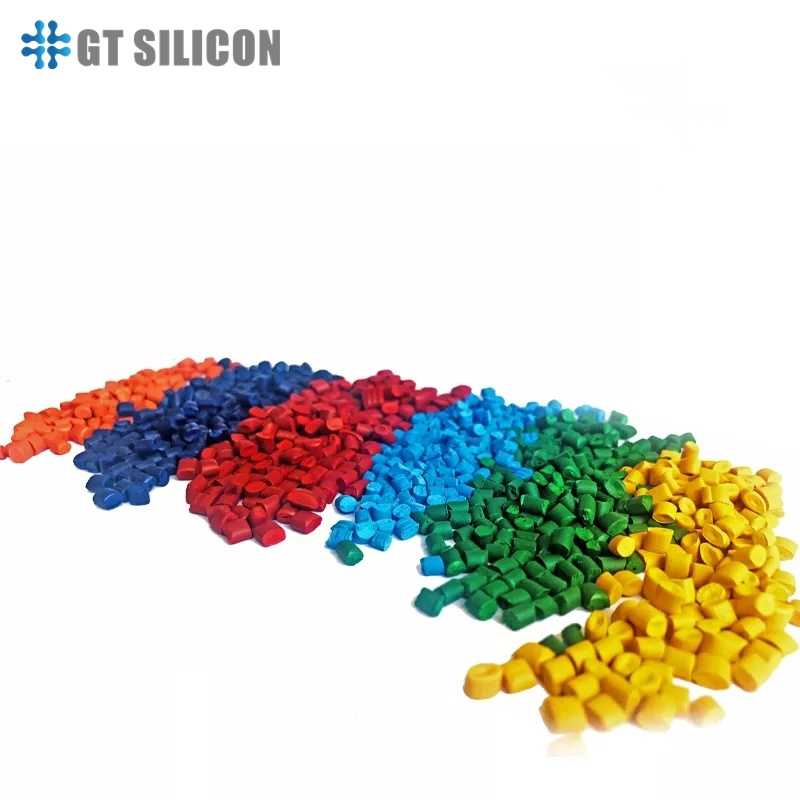
Chemical companies are heavily investing in green formulations. The market has moved past theoretical concepts. We now have commercial-scale solutions ready for implementation. Three primary technology pathways dominate the 2026 landscape.
Bio-Based Masterbatches: These solutions decouple plastic production from fossil fuels. They utilize agricultural byproducts or renewable plant-based resins as carriers. Polylactic acid (PLA) and polyhydroxyalkanoates (PHA) are leading examples. Bio-based carriers measurably reduce your overall carbon footprint. They are highly effective for single-use packaging and agricultural films.
PCR-Carrier Masterbatches: Consumer brands face aggressive minimum recycled-content mandates. PCR-carrier formulations help end-users meet these strict targets. These masterbatches are formulated with up to 100% recycled carrier resins. They seamlessly integrate into your process without disrupting the primary polymer matrix. They support the circular economy directly.
Biodegradable and Compostable Solutions: These are specialized additive and colorant blends. They are specifically designed for industrial or home composting environments. They break down naturally over time. However, manufacturers face a significant caveat. You must ensure the pigment itself does not leave toxic residues. Heavy metals cannot leach into the soil upon degradation. Proper formulation is absolute paramount here.
Adopting sustainable materials introduces unique engineering challenges. Traditional petrochemical polymers are highly forgiving. They handle high heat and aggressive processing speeds well. Eco-friendly alternatives require much tighter processing controls. You need specific strategies to maintain product quality.
Thermal stability is the primary implementation risk. Biodegradable plastics often suffer severe degradation at standard extrusion temperatures. If the machine runs too hot, the biopolymer burns or loses strength. To solve this, vendors are highlighting recent innovations in low-temperature carrier resins. These specialized carriers melt at lower thresholds. They protect delicate pigments and functional additives from thermal stress. Operators must carefully recalibrate their heating zones. Cooling times might also require slight adjustments to ensure dimensional stability.
Recycled plastics are inherently inconsistent. Post-consumer waste varies greatly by batch. The base material often exhibits natural yellowing or graying. This discoloration ruins brand-specific visual aesthetics. To counteract this, manufacturers use AI-driven formulation and spectrophotometry. Smart software analyzes the exact tint of the incoming PCR batch. It then calculates the precise masterbatch colorant adjustments needed. Specialized masking agents neutralize the gray tones. This technology guarantees brand-compliant color consistency across highly inconsistent raw materials.
Less plastic means lower emissions. Downgauging reduces the overall thickness of a product. Achieving this requires high-performance nano-pigments and strengthening additives. These advanced materials allow for much thinner packaging films. You reduce overall plastic volume and slash transportation emissions. Remarkably, this happens without compromising barrier properties or tensile strength. Nano-pigments deliver extreme opacity at minimal dosage levels. This efficiency drives both environmental and economic benefits.
Chart: Processing Challenges vs. Modern Solutions | ||
Implementation Challenge | Root Cause | 2026 Technical Solution |
|---|---|---|
Polymer Degradation | High extrusion temperatures | Low-temperature bio-carriers |
Inconsistent Branding | PCR resin yellowing/graying | AI color matching & masking agents |
Loss of Opacity | Film downgauging (thinning) | High-density nano-pigments |
MRF Sorting Failures | Standard carbon black limits | NIR-detectable black dyes |
The market contains numerous suppliers making vague environmental claims. Greenwashing poses a severe risk to your brand reputation. Selecting the right partner requires rigorous vetting. You must move beyond simple marketing brochures. Objective criteria and thorough auditing are completely non-negotiable.
Stop accepting self-reported claims. Vendors must provide verifiable, globally recognized certifications. For compostability, demand documents like TÜV Austria or DIN CERTCO. These confirm the material actually degrades under specified conditions. If you produce food packaging, food-contact safety is paramount. Ensure the supplier holds FDA or EFSA compliance for their recycled content. Independent validation protects you from regulatory fines and consumer backlash. Maintain updated copies of these certificates for your own audits.
Every manufacturing environment is unique. You cannot assume a new green material will work flawlessly. Run extensive pilot tests evaluating the colorant’s compatibility with your specific baseline resin. During these trials, monitor several critical parameters. Check meticulously for pigment migration over time. Look for any structural warping after cooling. Ensure there is no loss of mechanical integrity. Drop tests and tensile evaluations confirm the material handles real-world stress. Only scale up production after completing these rigorous physical tests.
Regulators increasingly demand proof of origin. They want to know exactly where your bio-resins or PCR content came from. The industry sees a growing role for digital twins and blockchain technology here. These digital tools verify the origin of raw materials transparently. They track the material from the waste facility to your factory floor. This level of supply chain traceability ensures audit-readiness. It streamlines your mandatory environmental compliance reporting.
When shortlisting partners, ask these specific questions:
Can you provide batch-specific carbon footprint data?
Do your PCR carriers match the exact melt flow index of our primary resin?
Are your manufacturing facilities powered by renewable energy?
What specific masking agents do you use for post-consumer recycled bases?
Packaging design is undergoing a massive simplification process. Complexity hinders recycling. The future belongs to streamlined, highly engineered material structures. You must prepare your product lines for this inevitable shift.
Multi-layer, mixed-plastic packaging is increasingly unrecyclable. Facilities cannot easily separate PET, EVOH, and PE bonded together. Consequently, brands are rushing toward mono-material designs. These utilize a single polymer family, such as all-PE or all-PP structures. However, single polymers often lack necessary barrier properties. Selecting advanced masterbatches solves this problem. You can embed UV protection and oxygen scavenging properties directly into the mono-material. This innovation preserves shelf life while guaranteeing complete recyclability.
Traditional manufacturing often utilizes multiple separate feeders. Operators dose color, UV stabilizers, and slip agents individually. This process invites costly mistakes. It also requires extensive inventory space. The modern approach involves consolidating additive packages. Suppliers now combine colorants, antistatic agents, and antioxidants into a single masterbatch pellet. This multi-functional approach drastically reduces the dosing error rate. It lowers your inventory holding costs. Furthermore, it streamlines the entire extrusion process. Operators simply manage one hopper instead of four. This efficiency improves overall factory output.
The shift toward sustainable masterbatch colorant options in 2026 is undeniable. It is driven by concrete regulatory demands and strict economic factors, not just consumer sentiment. The transition to circular manufacturing is now a structural requirement for survival.
Procurement and engineering teams must act decisively. You should immediately audit your current colorant portfolio against upcoming EPR standards. Identify any legacy materials slated for heavy taxation. Next, request PCR-compatible or bio-based pilot samples from your shortlisted vendors. Run comprehensive extrusion trials to establish baseline performance metrics. Finally, validate all environmental claims through respected third-party certifications. Taking these proactive steps ensures your production remains profitable and compliant in a rapidly evolving market.
A: Bio-based or biodegradable carriers may require lower processing temperatures to prevent polymer degradation. This constraint can necessitate specific adjustments to your extrusion speeds and cooling times. Processors often need to fine-tune their thermal profiles to maintain optimal throughput without burning the sensitive eco-friendly additives.
A: Yes, advanced formulations now achieve metallic, pearlescent, and high-opacity effects. However, achieving exact color matches in high-PCR content bases requires specialized masking agents. These specific agents offset natural base-resin discoloration, ensuring your brand colors remain vibrant and consistent across varying recycled batches.
A: Look for independent verification such as EN 13432, DIN-Geprüft Industrial/Home Compostable, or BPI certification. These recognized standards ensure both the carrier resin and the pigments break down safely. They guarantee the material leaves no toxic residues and prevents heavy metal leaching into surrounding soils.


