
- All
- Product Name
- Product Keyword
- Product Model
- Product Summary
- Product Description
- Multi Field Search


Views: 118 Author: Site Editor Publish Time: 2026-07-16 Origin: Site


Specifying color in injection molding carries incredibly high stakes. Choosing the wrong masterbatch colorant does more than ruin part aesthetics. It frequently leads to severe structural delamination, skyrocketing scrap rates, and heavily compromised mechanical properties. Moving from early prototyping to full-scale production changes everything on the shop floor. We must shift away from ad-hoc, unpredictable coloring methods toward highly consistent, quantifiable solutions. You will face a constant challenge in balancing precise pigment loading, strict carrier compatibility, and reliable thermal stability. This guide offers a comprehensive technical evaluation framework for both production engineers and procurement teams. We will help you specify the exact formulation needed for your application. You will learn how to evaluate true production economics efficiently and proactively prevent common molding defects before they start.
Carrier compatibility is non-negotiable: The masterbatch carrier resin must match the base polymer to prevent delamination and localized physical weaknesses.
MFI dictates dispersion: A masterbatch with a Melt Flow Index (MFI) mismatched to the base resin will cause unmelted specks and visual streaking.
Total cost includes scrap reduction: While dry pigments are cheaper upfront, masterbatches lower the total cost per part through reduced machine cleaning time, automated gravimetric feeding, and lower rejection rates.
Process variables alter perceived color: Variations in wall thickness (DFM) and cooling rates can create visual color shifts, even when the chemical formulation is perfect.
Let us examine the industrial sweet spot. You need serious cost-efficiency, but you cannot sacrifice physical precision. We consistently see top manufacturers relying on a masterbatch colorant to hit this balance perfectly. Liquid colorants often clump. They tend to ball up directly in the feed throat of the molding machine. This causes significant downtime and highly unpredictable aesthetic results. Dry pigments present entirely different operational headaches. They generate excessive airborne dust. This microscopic dust contaminates modern cleanrooms and accelerates delicate machine wear. Operators also must perform intensive hopper cleaning routines between every single production run.
When should you choose pre-colored compounds instead? Medical devices and zero-tolerance aerospace applications demand absolute perfection. Pre-colored compounded resins eliminate mixing variables entirely. The polymer arrives already tinted at the exact required specification. However, this premium approach carries the highest upfront material cost. You also lose critical inventory flexibility. You cannot easily pivot to a new shade if consumer market demands shift suddenly.
Scalability shifts the entire business equation. Utilizing a solid color concentrate allows molders to buy natural base resin in massive bulk quantities. You secure aggressive, low commodity prices. You simultaneously maintain aesthetic flexibility on the factory floor. You achieve this through precise, automated on-site dosing equipment. This strategic method keeps your raw inventory lean. It keeps your overall operational agility extremely high.
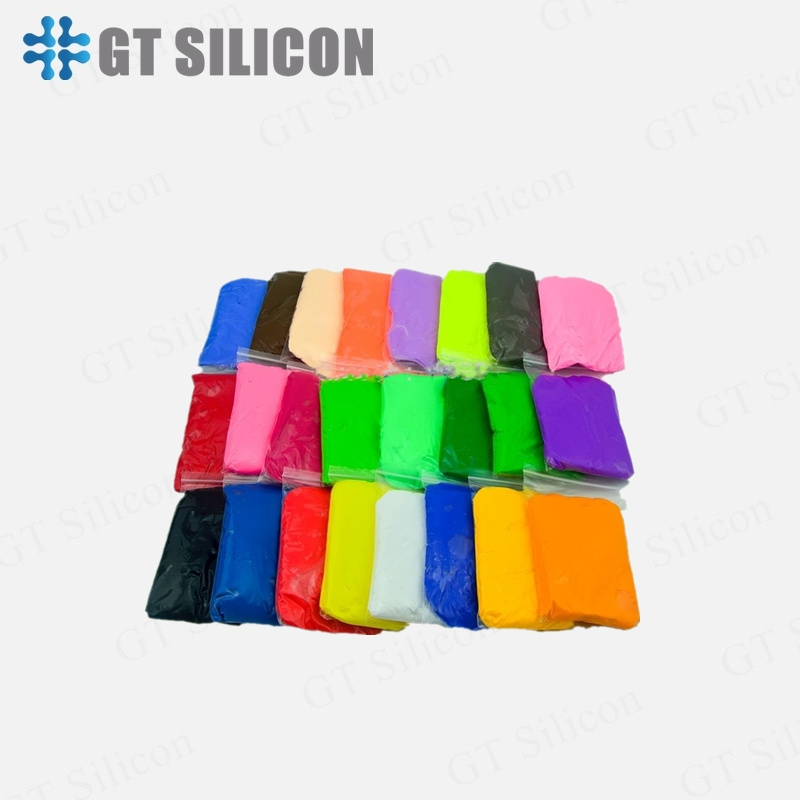
Consider the severe "oil and water" compatibility risk. A standard industrial formulation contains up to 70% pure concentrated pigment. Chemical manufacturers suspend this active pigment inside a carrier resin. This specific carrier must bond chemically with your base polymer. Using a generic carrier for a specialized PC/ABS blend causes immediate catastrophic failure. The resulting molded part will suffer from intense internal stress cracking. It will inevitably show severe delamination under routine physical loads. The plastic layers will literally peel apart.
Matching the Melt Flow Index (MFI) is equally critical. The carrier must melt at the exact same rate as the base resin. In some specialized molding cases, it should actually melt slightly faster. A carrier possessing a mismatched, low MFI will not disperse properly before entering the final injection phase. You will see ugly non-melting color dots on the surface. The final product will exhibit highly localized physical weaknesses.
Handling hygroscopic materials requires strict manufacturing discipline. Carrier resins intended for Nylons, Polycarbonates, and ABS need thorough mechanical drying. Trapped moisture causes ugly silver streaks across the part surface. Operators universally call this visual defect splay. Moisture also severely degrades delicate pigment chemistry under high barrel temperatures. This drastically shifts the final visual output away from your target.
Simple HTML Chart: Material Compatibility Overview | |||
Base Resin | Ideal Carrier Resin | Drying Required? | Delamination Risk (if mismatched) |
|---|---|---|---|
Polypropylene (PP) | PP Carrier | No | High |
Polycarbonate (PC) | PC Carrier | Yes (Critical) | Very High |
ABS | ABS / SAN Carrier | Yes | High |
Polyethylene (PE) | PE Carrier | No | Moderate |
We need to evaluate organic versus inorganic pigment options carefully. You must understand their distinct chemical behaviors to make an informed specification.
Organic Pigments: Choose these specific molecules for high-vibrancy, heavily saturated aesthetics. They deliver brilliantly intense hues. However, they possess significantly lower thermal thresholds. They also show much higher vulnerability to rapid ultraviolet degradation.
Inorganic Pigments: Examples include widely used Titanium Dioxide and raw Iron Oxides. We strongly recommend these compounds for heavy-duty industrial applications. Use them confidently for outdoor or high-heat environments. They offer superior weatherability and unmatched visual opacity.
Integrating functional additives changes the entire business case. Multi-functional formulations provide incredible shop-floor value. Advanced chemical combinations now routinely include active UV stabilizers and robust flame retardants. "Low Heat Build" additives represent a massive technological leap forward. They actively reflect specific infrared spectrums. This prevents dark-colored structural parts from warping heavily in direct sunlight.
You must apply strict regulatory and compliance filters early in the design phase. Ensure the selected formulation meets exact end-use requirements. Food packaging demands rigorous FDA compliance. Electronics components strictly require RoHS and REACH certification. Medical devices legally mandate proven biocompatibility standards. A reliable masterbatch colorant supplier provides these technical certifications proactively.
Defining the Let-Down Ratio (LDR) is your first crucial mathematical test. LDR represents the exact percentage of concentrate added directly to the natural base resin. Typical industrial dosing ratios fall strictly between 1% and 4%.
Deep, dark shades possess incredible tinting strength. They require significantly lower LDRs to achieve full coverage.
Transparent or light shades over a yellowish base resin pose a unique challenge. They demand much higher LDRs to achieve acceptable visual opacity.
Let us look at actual dosing equipment realities on the active shop floor. Small, rapid prototype batches might still rely on manual drum mixing. True aesthetic consistency requires deep equipment automation. You need gravimetric or volumetric feeders mounted directly at the feed throat of the press. This simple mechanical upgrade eliminates daily human error. It also drastically reduces frustrating batch-to-batch visual variation. Gravimetric systems precisely weigh the material in real-time, offering superior precision over older volumetric models.
Avoid the dangerous cost versus performance trap. Do not evaluate plastic coloring materials purely on strict price per kilogram. A seemingly cheap formulation often requires a much higher LDR to achieve basic opacity. It frequently results in significantly higher daily scrap rates. These hidden manufacturing expenses immediately erase any initial upfront purchasing savings. You must carefully look at overall production economics instead.
Design for Manufacturability (DFM) influences final aesthetics heavily. Inconsistent wall thickness directly alters local physical cooling rates. Thicker plastic sections cool much slower inside the closed mold. This drastically changes the local polymer crystallinity. The material appears significantly darker than thin-walled sections. This visual shift occurs even if chemical dispersion remains completely flawless.
Streaking and specks point to distinct processing errors. Trace these physical defects back to highly inadequate screw back pressure. Low barrel temperatures also cause this exact visual issue. An MFI mismatch remains a primary suspect during routine troubleshooting.
Increased part breakage signals a severe underlying formulation problem. Operators sometimes overload the mixture dangerously. Exceeding the recommended LDR to "force" a visual color match physically disrupts internal polymer chains. This drastically lowers overall impact resistance and tensile strength.
Machine-to-machine discrepancies baffle many veteran process engineers. An aesthetic match might look perfect on one press but shift completely on another machine. Uncalibrated thermocouple data usually causes this specific discrepancy. The actual melt temperature differs wildly from the displayed digital temperature. This pushes delicate organic pigments past their known thermal degradation points.
Troubleshooting Matrix for Color Defects | ||
Visual Defect | Primary Root Cause | Corrective Action |
|---|---|---|
Color Specks / Dots | Mismatched MFI or low barrel temperature | Increase back pressure or specify a higher MFI carrier. |
Silver Streaking (Splay) | Moisture trapped in hygroscopic carrier | Dry material thoroughly before processing. |
Darker / Lighter Zones | Inconsistent wall thickness affecting cooling | Redesign part DFM to ensure uniform wall thickness. |
Brittle Parts | Overloading LDR or incompatible carrier | Reduce LDR to 1-4% range; match carrier to base resin. |
Specifying a premium masterbatch colorant is a complex physical, chemical, and economic decision. It goes far beyond a simple aesthetic choice. You must balance resin compatibility, mechanical integrity, and reliable dosing methods to achieve true manufacturing success. Approach your suppliers with exact base resin grades. Provide accurate processing temperatures and strict UV requirements upfront. Supply your target Let-Down Ratios directly to the technical team. Do not just hand them a basic Pantone matching system (PMS) chip.
Consult with a technical sales engineer immediately to review your upcoming projects. Request comprehensive material safety data sheets (MSDS) for all incoming formulations. Order pilot sample batches for localized trial runs before ever approving full-scale production. Take precise action today to secure your molding consistency and protect your profit margins.
A: At recommended LDRs (usually 1-4%), mechanical impact is negligible. However, overloading pigments or using incompatible carrier resins will disrupt polymer chains and cause brittleness. We always advise matching the carrier specifically to the base polymer to maintain original structural integrity.
A: Differences usually stem from part geometry (wall thickness dictating cooling rates), the natural base-color of the un-pigmented resin (e.g., milky vs. clear), or surface finish (textured vs. high-gloss mold cavities). A glossy surface reflects more light, making colors appear significantly brighter than heavily textured finishes.
A: Generally, no. While "universal" carriers exist, they are compromises that often cause dispersion issues or delamination in engineering-grade resins. A resin-specific carrier is always the safest specification to prevent costly part failures during end-use applications.


