
- All
- Product Name
- Product Keyword
- Product Model
- Product Summary
- Product Description
- Multi Field Search


Views: 152 Author: Site Editor Publish Time: 2026-07-06 Origin: Site


Selecting a silicone rubber supplier goes beyond simple price negotiations. The right manufacturing partner fundamentally shapes your product success. Batch inconsistencies and poor formulation often lead to unexpected defect rates. These issues directly impact regulatory compliance. They also disrupt your delicate supply chain. Procurement engineers need reliable materials to guarantee peak performance. Your final products must survive harsh industrial environments.
This guide helps you navigate supplier selection carefully. We will explore advanced formulation expertise. We will examine strict quality controls and essential industry certifications. You will learn how to evaluate technical capabilities effectively. Securing a dependable manufacturing partner requires a structured approach. Let us explore the critical criteria for evaluating top-tier silicone suppliers.
Formulation Expertise: Prioritize suppliers capable of customizing polymer chain lengths and filler ratios (e.g., fumed silica) to meet exact mechanical requirements.
Process Alignment: Ensure the supplier’s HTV compounds are optimized for your specific manufacturing method, whether compression, transfer molding, or extrusion.
Quality Infrastructure: Verify the presence of dedicated cleanroom facilities and stringent mixing controls to guarantee color stability and prevent cross-contamination.
Compliance Verification: Demand transparent documentation for end-use standards, including FDA, ISO 10993, USP Class VI, RoHS, and REACH.
Evaluating supplier curing system expertise is critical. You need the right curing system for your application. Competent suppliers will recommend the most effective chemical approach. Look for expertise in peroxide-cured systems. These standard systems are cost-effective and highly durable. They suit rugged industrial applications perfectly. You must also assess their knowledge of platinum-cured systems. Platinum curing offers rapid processing speeds and exceptional purity. It leaves zero unwanted by-products behind. Medical and food-grade products typically require this premium curing method.
Mechanical property optimization separates average suppliers from industry leaders. A capable supplier adjusts raw material selection seamlessly. They solve specific physical challenges through chemistry. For instance, they might utilize high-molecular-weight polymers. They carefully control precise fumed silica dosing. This combination improves tear resistance significantly. It achieves this without compromising material elongation. You should demand data proving these mechanical balancing capabilities.
Color matching requires rigorous internal compounding methodologies. Mass production demands exact visual consistency. Assess their coloring methodology thoroughly. Suppliers using solid color masterbatches typically offer superior results. Masterbatches provide better pigment dispersion. They guarantee batch-to-batch Pantone consistency easily. Raw color pastes often cause uneven coloring during scale-up. Avoid suppliers relying solely on outdated paste methods.
The supplier’s htv silicone formulations must align perfectly. They need to match your specific production line. Verify their experience supplying optimized compounds.
Molding Technique | Best Used For | Formulation Requirement |
|---|---|---|
Compression Molding | Heavy-duty seals, large gaskets. | Excellent dimensional stability; low shrinkage rates during high-heat curing. |
Transfer Molding | Complex shapes, metal over-molding. | Enhanced flow characteristics to avoid trapped air and fill intricate cavities. |
Extrusion | Continuous profiles like tubing and strips. | High "green strength" to maintain shape before entering the vulcanization oven. |
Best Practice: Always request a pilot run. Test the formulation on your actual equipment. Small-scale lab tests rarely replicate full production stresses perfectly.
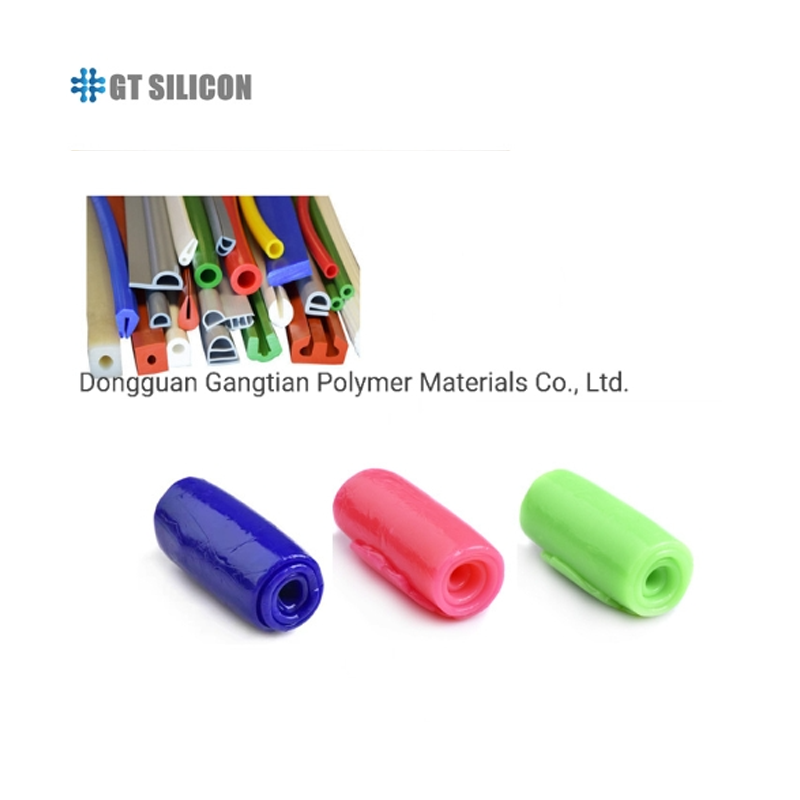
Mixing and dispersion controls dictate final product durability. Inconsistent mixing leads to structural weak points. These weak points cause premature tearing in the final product. Ask potential suppliers about their twin-roll milling processes. Understand how they ensure uniform dispersion. Cross-linking agents must distribute evenly prior to vulcanization. Uneven dispersion causes unpredictable curing behaviors. It ruins entire production batches quickly.
Manufacturing environments matter immensely. Medical, pharmaceutical, and food-contact applications require pristine conditions. The manufacturing environment is as critical as the material itself. Verify the supplier utilizes enclosed facilities. Controlled cleanrooms mitigate airborne contaminant risks effectively. They prevent dangerous cross-contamination. Many facilities process multiple industrial rubbers simultaneously. Cleanrooms keep high-purity silicone isolated from common black rubber soot.
Testing and traceability protocols prove supplier reliability. Request sample Certificates of Analysis (COA) early. Reliable suppliers test every single batch rigorously. They measure several key performance metrics. You should look for strict adherence to testing standards.
Tensile Strength: Measures the force required to break the material.
Compression Set: Must remain low (e.g., ≤20% after 22h at 150°C) for sealing applications.
Hardness Tolerances: Shore A hardness must remain within a ±3 to ±5 point range.
Curing Profiles: Rheometer data must confirm consistent vulcanization times.
Common Mistake: Relying on generic material data sheets (TDS) instead of batch-specific COAs. A generic TDS shows theoretical maximums. A COA shows actual shipped material performance.
Developing healthcare or baby products demands absolute material safety. The supplier must provide traceable biocompatibility compliance. They must offer valid ISO 10993 test reports. Some markets require USP Class VI certifications. The silicone must be proven completely non-toxic. It must remain odorless during prolonged use. Sterilization compatibility is another mandatory requirement. The material must withstand repeated autoclaving. It should also survive gamma radiation without degrading.
Food contact applications carry strict legal liabilities. Validate FDA compliance thoroughly for all food-grade applications. Ensure the material does not leach harmful by-products. Ask for extraction test results. These tests simulate prolonged contact. They use fatty and acidic food simulants. You must verify European food safety standards too. LFGB certification is often required for European market entry. LFGB standards are typically stricter than FDA requirements.
Industrial and automotive specifications dictate extreme durability. Heavy-duty applications include automotive turbo hoses. Heavy-duty dampening mounts face brutal conditions daily. You must verify strict adherence to environmental laws.
RoHS and REACH Compliance: Ensure the material contains no banned heavy metals or restricted chemicals.
Extreme Temperature Resistance: Evaluate historical testing data. The material must perform reliably between -60°C and +300°C.
Fluid Resistance: Request fluorosilicone (FVMQ) variants. These variants resist aggressive fuels and transmission oils.
Flame Retardancy: Verify UL94 V-0 ratings for electrical or transit applications.
Never accept verbal assurances regarding compliance. Certified third-party laboratory reports are mandatory. Keep these documents updated annually. Supplier raw material sources change occasionally. These changes can quietly invalidate older compliance certificates.
Lack of curing inhibition knowledge is a glaring warning sign. Ask the supplier about platinum cure inhibition. They must explain this concept clearly. Inhibition occurs when platinum catalysts touch contaminants. These contaminants "poison" the curing reaction permanently. The silicone remains uncurled and sticky. Common poisons include natural latex. Sulfur compounds also destroy platinum catalysts. Certain amines and heavy metals cause identical failures. If a supplier cannot articulate these risks, walk away. They lack the deep technical expertise needed for complex projects.
Vague certification claims represent another massive risk. Be highly skeptical of suppliers claiming "medical grade" loosely. They often fail to provide specific test reports. An ISO or USP report must match the exact formulation batch. Medical grade is not a generic marketing term. It is a strict legal classification. Request the laboratory name. Verify the report directly. Fraudulent certificates appear frequently in global supply chains.
Avoid the "one-size-fits-all" approach entirely. Unprofessional suppliers push standard VMQ formulations for everything. They ignore your application's unique resilience requirements. Standard VMQ fails in extreme environments. Fuel resistance applications require specialized FVMQ materials. Extreme cold environments demand PMQ formulations. A knowledgeable partner asks detailed questions first. They explore your operating temperatures. They ask about chemical exposure. Only then do they recommend a specific polymer base.
What to Watch Out For: Watch how quickly they quote a price. If they provide pricing before understanding your application environment, they prioritize volume over quality. True formulation experts qualify the engineering requirements first.
Choosing the right silicone rubber supplier requires diligent research. You must balance raw material science closely. You must validate manufacturing infrastructure thoroughly. Prioritize proven formulation expertise above all else. Demand consistent quality control mechanisms. Verify all compliance certificates through independent laboratories.
Procurement teams can secure a highly reliable partner. You will minimize catastrophic production risks. You will ensure final product reliability in the field. Begin your vetting process immediately. Request detailed material data sheets (TDS). Ask for recent batch testing reports. Finally, schedule a small-scale sample run. This validates process compatibility on your factory floor. Take these steps to guarantee manufacturing excellence.
A: Request historical quality control data on their color matching. Reliable suppliers use solid silicone color masterbatches and spectrophotometers. These tools ensure precise, repeatable Pantone matching across different production runs. Avoid suppliers using manual paste mixing, as it causes severe color drifting over time.
A: HTV is generally highly effective for medium-to-large-sized parts. It excels in heavy-duty industrial seals and mass production runs exceeding 10,000 units. The lower tooling costs of compression molding present a highly efficient manufacturing strategy compared to complex LSR injection molding setups.
A: Failure is often caused by poor dispersion of cross-linking agents. Premature cross-linking occurs due to improper temperature control during mixing. Cure inhibition heavily impacts platinum-cured systems exposed to sulfur or latex. A qualified supplier strictly controls the mixing sequence and manufacturing environment to prevent contamination.
A: Yes. Expert suppliers can optimize the formulation easily. They select base polymers possessing a narrow molecular weight distribution. They carefully control the addition of reinforcing fillers. Using specific amounts of fumed silica enhances tear strength significantly without making the material too rigid for processing.


