
- All
- Product Name
- Product Keyword
- Product Model
- Product Summary
- Product Description
- Multi Field Search


Views: 0 Author: Site Editor Publish Time: 2026-09-04 Origin: Site


Modern textiles and industrial products demand extreme flexibility, rugged weather resistance, and a premium tactile feel. Manufacturers constantly push boundaries in high-performance apparel and outdoor gear. Unfortunately, this rapid material innovation outpaces the capabilities of traditional plastisol and water-based inks. You often face cracked designs or heavy, uncomfortable prints when applying legacy options to highly elastic fabrics. High-tech synthetics simply reject older chemical formulas.
silicone ink emerges as the definitive, high-margin solution for these demanding substrates. It delivers a remarkably soft hand and unmatched durability. Furthermore, it easily withstands extreme stretching and harsh environmental exposure. However, adopting it requires a realistic understanding of its specific production requirements. You cannot treat it like plastisol. We will explore why it outperforms older technologies, how to evaluate top-tier formulations, and what changes your production floor must implement to succeed.
Legacy inks frequently fail on highly elastic or synthetic substrates. Plastisol often cracks under physical stress. It sits on top of the fabric, leaving a heavy, unbreathable layer. Consumers dislike this thick, rigid feeling on athletic garments. Water-based inks face a different set of challenges. They struggle to adhere properly to synthetic blends like nylon. They also suffer from severe dye migration issues when applied to dyed polyester. These failures create unacceptable defect rates for premium brands.
Conversely, silicone offers extraordinary memory and recovery. When you apply a stretchable print ink to fabrics like Lycra or spandex, it stretches seamlessly. More importantly, it snaps back instantly without any distortion. The molecular structure of the cured print moves dynamically alongside the woven fibers. This natural elasticity entirely prevents the micro-cracking you see in older ink systems.
Beyond textiles, industrial environments demand extreme toughness. You need a heat resistant silicone ink for applications involving automotive components, harsh wash cycles, and swim caps. Silicone remains chemically inert under extreme stress. It withstands boiling water, prolonged UV exposure, and heavy mechanical abrasion without degrading. Traditional inks melt, peel, or fade under these identical conditions. For manufacturers producing high-wear gear, this resilience is absolutely non-negotiable.
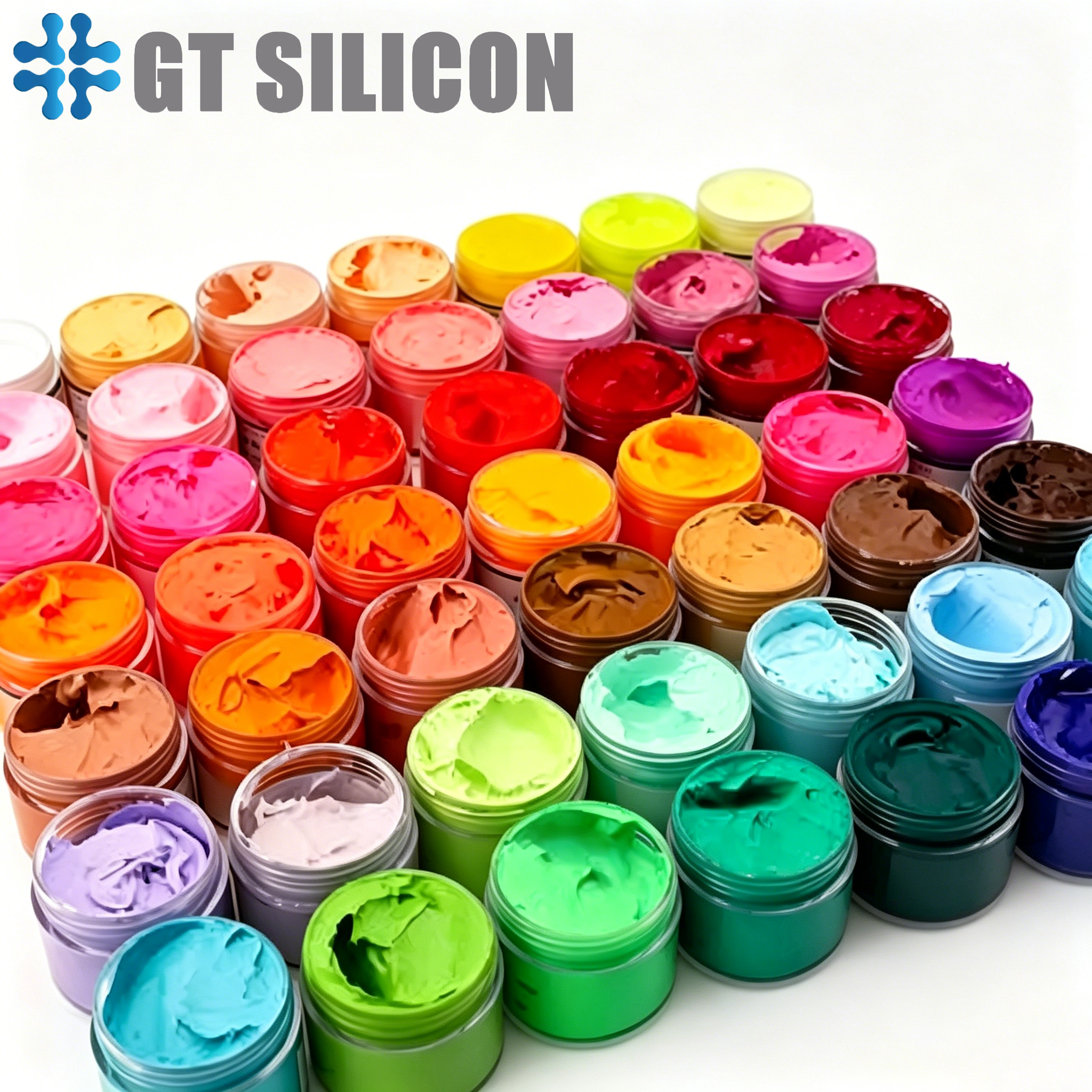
Choosing the right formula dictates your success in durable silicone printing. You must evaluate several critical dimensions before running a full production cycle. Not all formulations behave identically across different substrates.
First, consider adhesion and wash fastness. Notoriously difficult substrates require highly specialized chemical bonds. Fabrics treated with DWR (Durable Water Repellent) reject standard inks because of their low surface tension. Raw silicone goods also repel foreign chemicals. You must measure baseline metrics for rub-resistance and anti-peeling properties. Always subject your test prints to industrial wash testing before approving a job.
Next, evaluate tactile quality. High-end retail apparel demands a premium, soft-touch finish. The cured surface must feel smooth and entirely non-tacky. If a print feels sticky, it will attract lint and dust. Premium buyers expect a garment to feel luxurious. A properly formulated ink delivers a matte, dry hand feel.
Color opacity and bleed resistance also play pivotal roles. Sublimated fabrics release trapped dyes when exposed to oven heat. This phenomenon ruins light-colored graphics. A high-quality silicone base layer acts as an impenetrable shield. It blocks dye migration completely and keeps your top colors vibrant.
Finally, regulatory compliance is critical today. Brands heavily scrutinize chemical safety. You must ensure formulas are entirely PVC-free and phthalate-free. Look for recognized certifications like OEKO-TEX Standard 100 or ZDHC. These frameworks guarantee your prints meet strict ecological and human health standards. Products passing OEKO-TEX Class 1, for example, are certified safe even for infant apparel.
Ink systems generally fall into two distinct categories. You can choose ready-to-use formulas or component-based setups. Your choice depends entirely on your production volume and internal expertise.
Ready-to-use systems arrive pre-pigmented. They suit low-volume runs perfectly. Shops lacking advanced color-mixing infrastructure often prefer this route. It drastically lowers the risk of human error during formulation. You simply weigh the catalyst, mix it in, and begin printing. However, buying every color pre-mixed increases your inventory costs.
High-volume shops require a highly scalable approach. A base plus pigment concentrate system offers significant economic advantages. You stock large buckets of clear or white bases alongside separate silicone pigment concentrates. This strategy allows for precise color-matching on demand. It reduces inventory space and prevents material waste. You only mix the specific color volume required for the day.
Specialty additives further customize ink behavior. Retarders slow down drying times in hot environments. They keep the mesh open longer during slow print strokes. Accelerators speed up curing for faster conveyor belt speeds. Puff additives expand under heat to create unique 3D textures.
| System Type | Best Fit For | Key Advantage | Primary Drawback |
|---|---|---|---|
| Pre-Mixed Colors | Low-volume shops, beginners | Zero color formulation required | High inventory cost per color |
| Base + Pigments | High-volume, advanced shops | Infinite color matching, lower cost | Requires precise mixing scales |
| Specialty Additives | Custom texture and climate control | Solves specific production hurdles | Over-use can weaken ink adhesion |
Switching to a new chemistry requires significant operational shifts. silicone screen printing involves specific physical constraints on the production floor. You must train your operators to respect these boundaries.
Pot life presents the biggest daily hurdle. Once catalyzed, the ink typically offers a 4 to 12-hour workable window. You must mix only what you need for a single shift. If you mix too much, it cures solid in the bucket. This turns expensive materials into useless waste.
Catalyst and mixing ratios demand absolute precision. Eye-balling measurements will destroy your print run. You must use a digital gram scale accurate to 0.1 grams. Incorrect ratios lead to catastrophic curing failures or a total loss of wash fastness.
Best Practices for Mixing:
Mesh counts and tooling also require adjustments. We recommend optimal mesh parameters for a clean ink sheer. You generally use lower mesh counts (like 80 to 110) for thicker base deposits. Higher mesh counts (up to 200) work well for fine top-color details. A medium-durometer squeegee (typically 70 or 75) provides the best ink shear. Ensure you maintain a consistent squeegee angle and pressure.
Curing parameters dictate the final success of the garment. Silicone cures via a specific chemical cross-linking reaction driven by heat.
Partnering with a reliable silicone ink supplier determines your long-term success. You cannot simply buy the cheapest option. Evaluate potential candidates based on three core pillars.
First, assess their technical support and onboarding capabilities. Will they provide on-site troubleshooting? Do they supply highly detailed technical data sheets (TDS) for curing and mixing? You need a responsive partner who answers the phone when a print run goes wrong. A vague TDS indicates poor quality control.
Second, verify ecosystem completeness. The supplier must offer a fully compatible suite of bases, pigments, catalysts, and reducers. Mixing brands often causes severe chemical conflicts. A closed-loop ecosystem guarantees predictable results. You avoid cross-contamination risks.
Third, scrutinize their supply chain consistency. Assess their track record for batch-to-batch color matching. Raw material availability prevents sudden production bottlenecks. You cannot afford to stall lucrative orders because a supplier unexpectedly ran out of white base or catalyst.
Adopting high-performance silicone systems transforms your printing capabilities. The transition does involve higher upfront material costs and a steeper learning curve for operators. However, you easily offset these factors by accessing premium, high-margin apparel and industrial markets. These prints survive extreme wear, stretch effortlessly, and deliver unparalleled hand feel. As a next step, we strongly recommend ordering a sample kit. Request a clear base, catalyst, and standard pigment from your chosen provider. Conduct localized wash and stretch tests in your own facility. Validate the workflow and cure times before committing to full-scale adoption.
A: Once you mix the catalyst into the base, the ink remains workable for typically 4 to 12 hours. Ambient temperature heavily influences this window. Hotter environments accelerate the chemical reaction, drastically reducing pot life. Cooler shop temperatures can extend it. Always mix only the exact amount you plan to use during a single shift.
A: No, you cannot mix these chemistries. Silicone suffers from extreme chemical incompatibility with traditional inks. It will not bond to plastisol or water-based layers, leading to immediate adhesion failures and peeling. Silicone only adheres securely to other silicone layers or directly to the raw fabric substrate.
A: Most standard systems cure between 250°F and 320°F (120°C to 160°C). However, temperatures vary drastically depending on the specific formulation and specialty additives used. You must verify these metrics with the specific manufacturer’s Technical Data Sheet. Proper dwell time in the dryer is just as critical as the temperature.
A: Curing failures usually stem from three common issues. First, you may have used an incorrect catalyst ratio by failing to weigh it precisely. Second, the catalyst itself might be expired or compromised by heavy humidity. Finally, the garment may have received insufficient heat or inadequate dwell time inside the conveyor dryer.


