
- All
- Product Name
- Product Keyword
- Product Model
- Product Summary
- Product Description
- Multi Field Search


Views: 172 Author: Site Editor Publish Time: 2026-07-20 Origin: Site


Colorant masterbatch sits at the center of that issue. Its pigments, carrier system, concentration, and additives can influence how materials process and how finished parts perform over time. Understanding these effects helps manufacturers choose color systems that support consistency, durability, and fewer production surprises.
Pigments create the shade, but the carrier resin largely determines how well the concentrate behaves once it enters the production process. When the carrier is compatible with the host material, the color system melts, disperses, and distributes more predictably through the polymer or rubber matrix. When compatibility is weak, the same shade can create streaks, unmelted particles, inconsistent flow, or surface defects that are visible only after molding, extrusion, or curing.
A practical specification should therefore start with the base material rather than the color chip. PE, PP, rubber, silicone-related materials, and engineering plastics do not process under identical melt behavior or shear conditions. A formulation that performs well in one material may not disperse cleanly in another, even if the target color is unchanged. Additives can further complicate the interaction because UV stabilizers, heat stabilizers, lubricants, fillers, flame-retardant systems, or recycled content may compete for compatibility inside the same compound.
Higher pigment concentration can reduce the amount of masterbatch needed to reach the desired shade. That can lower handling volume, simplify storage, and reduce the amount of non-base material introduced into the formulation. GT Silicone’s high pigment and additive concentration supports efficient coloring with minimal usage, which makes concentration a useful economic factor when production volumes are high. Still, a stronger concentrate is not automatically the best option for every line.
Over-concentration or aggressive dosing can disturb the processing balance of the host resin. Too much pigment or an incompatible additive package may change viscosity, reduce flow consistency, or increase the chance of poor dispersion. In mechanical parts, excessive color loading can also affect strength, flexibility, or impact performance if the pigment is not properly distributed. The best result is usually achieved through controlled let-down ratio, compatible carrier selection, and enough concentration to achieve color without overloading the formulation.
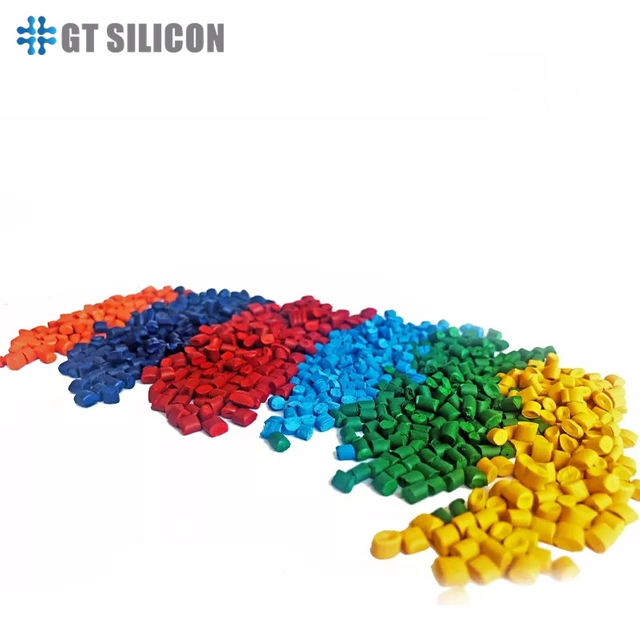
A lab plaque is useful, but it is not the full production story. Color can shift under real processing conditions because melt temperature, residence time, screw design, shear level, cooling rate, and recycled feedstock variation all influence the final appearance. Batch-to-batch shade control also depends on pigment stability and dispersion quality, not just the accuracy of the initial color match. A sample that looks correct under one molding condition may drift when the line speed, barrel temperature, or raw material lot changes.
Production approval should therefore include process conditions, not only visual inspection under standard lighting. A good trial checks whether the color remains stable after start-up, during continuous running, and after routine parameter adjustments. Recycled polymers need even more caution because gray, yellow, or mixed-color base materials can change opacity demand and hiding power. For consistent results, colorant masterbatch selection should be treated as part of the processing window, not as a decorative afterthought.
Poor dispersion is one of the fastest ways for a color choice to become a production problem. Streaks, specks, cloudy areas, uneven tone, or visible pigment clusters can force operators to increase mixing time, purge more material, or adjust process settings that were already stable. These defects are not just cosmetic because they can signal uneven distribution of pigments or additives within the part. Once the line begins producing rejects, the cost includes wasted resin, labor, machine time, inspection delays, and possible late delivery.
A well-dispersed color system reduces the need for repeated troubleshooting during start-up. GT Silicone’s additive colorant is built for even color distribution, helping reduce streaks and color inconsistencies. That matters because dispersion quality directly affects both appearance and the operator’s ability to maintain a stable production rhythm. When the masterbatch melts and distributes predictably, the process usually needs fewer manual corrections.
Production symptom | Likely masterbatch-related cause | Practical response |
Color streaks | Poor pigment dispersion or weak carrier compatibility | Check carrier match, mixing conditions, and dosage |
Black or white specks | Undispersed pigment, contamination, or unmelted particles | Review filtration, material handling, and dispersion grade |
Plate-out on tooling | Additive migration or excessive loading | Reduce dosage, check additive package, clean tooling |
Color drift during the run | Heat instability, residence-time sensitivity, or feed inconsistency | Verify temperature range and dosing accuracy |
Cloudy or uneven surface | Incompatible carrier or poor melt blending | Trial a better-matched formulation |
Color systems enter the process in small percentages, but their influence can be larger than their dosage suggests. A carrier resin with the wrong melt flow can change how the material fills a mold, forms a film, extrudes through a die, or distributes across a rubber compound. In injection molding, that may show up as flow marks, incomplete filling, color swirl, or variable cycle behavior. In extrusion and blow molding, the same issue may appear as unstable output, poor wall uniformity, or visible tone variation.
Dosing stability also matters because even small feeding errors can become visible in color-sensitive products. Gravimetric or volumetric feeders must deliver a steady let-down ratio, while the pellet size and flow behavior of the concentrate should support consistent metering. A masterbatch that bridges, segregates, or feeds unevenly can create shade fluctuation even when the formulation is technically correct. For high-volume production, processing performance depends on both the recipe and the physical handling behavior of the pellets.
Heat exposes weak color systems quickly, which is why a high-performance colorant masterbatch must be able to withstand the actual melt temperature and residence time without degrading. During molding, extrusion, or rubber processing, pigments and additives must tolerate the actual melt temperature and residence time without degrading, shifting shade, or losing effectiveness. A color that looks stable at moderate temperature may darken, yellow, fade, or lose brightness when exposed to a hotter barrel zone or a longer dwell time. Thermal instability can also create inconsistent batches because a short trial run may not reveal degradation that appears later in continuous production.
Temperature resistance should be reviewed before scale-up. GT Silicone’s additive colorant option offers processing temperature resistance up to 280°C, while its production-focused color masterbatch line is available with temperature resistance up to 330°C. These values make heat stability a relevant specification for high-temperature applications. The number alone is not enough, however, because the part geometry, machine design, residence time, and host resin also affect thermal exposure. A responsible trial should test the real process window rather than relying only on the nominal processing temperature.
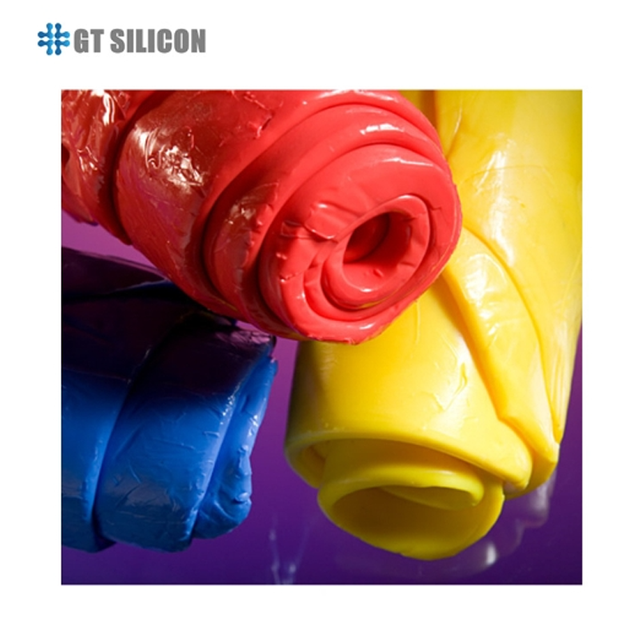
Color selection should not be assumed to improve or damage mechanical properties by default. The effect depends on pigment chemistry, particle size, loading rate, dispersion, carrier compatibility, and the sensitivity of the base material. When the colorant masterbatch is properly matched, it can preserve the expected tensile strength, flexibility, impact resistance, and part durability. When the formulation is poorly selected, pigment clusters or incompatible carriers may act as weak points in the material.
Mechanical risk is higher in parts that carry load, bend repeatedly, absorb impact, or operate in harsh service conditions. A decorative consumer item may tolerate a small performance change, while an automotive trim component, industrial rubber part, or construction product may not. The safest approach is to test the colored material rather than assuming the natural resin data still applies. Color approval should include relevant mechanical testing when the final product has structural, sealing, protective, or safety-related functions.
Outdoor products face sunlight, heat cycles, moisture, oxygen, cleaning chemicals, and mechanical wear. A shade that looks strong after molding may fade, chalk, discolor, or lose surface quality after months of service. UV exposure is especially important for automotive trims, construction materials, outdoor appliances, agricultural items, and visible rubber goods. Chemical contact and abrasion can also change the surface appearance even when the bulk material remains intact.
Long-term color stability depends on both the pigment and the supporting additive system. Lightfast pigments, UV stabilizers, antioxidants, and compatible carriers can help maintain appearance under demanding conditions. GT Silicone’s production-focused color masterbatch options include UV-stable colors for consumer goods, weather-resistant formulations for outdoor applications, and color systems for construction materials, packaging, automotive components, and recycled plastics. These application details should guide the questions a buyer asks: what exposure is expected, how long must the product retain its appearance, and what testing data supports the formulation?
Product performance is not only mechanical. Surface finish, gloss, matte effect, opacity, transparency, and color depth all influence how customers judge quality. A packaging component with uneven opacity may look cheaper even if it functions correctly. A molded appliance part with swirl marks or gloss variation can weaken brand perception because consumers read visual inconsistency as poor manufacturing control.
Opacity and hiding power are especially important when the base material is off-white, recycled, filled, or naturally translucent. Black, white, and high-chroma colors may require different pigment systems to cover the substrate without excessive loading. Transparent or translucent tints demand a different balance because too much hiding power can destroy the intended visual effect. The right colorant masterbatch should therefore support the intended finish while staying within the processing and mechanical limits of the material.
A color sample can look correct and still fail on the production line. Shade approval does not prove that the carrier resin is compatible, the pigment will survive heat, or the concentrate will disperse under actual shear conditions. Many defects appear only after the material has moved through the screw, mold, die, cooling system, or curing stage. This is why purchasing by visual match alone can create higher scrap costs than the apparent savings from a cheaper formulation.
The better approach is to approve color and process behavior together. Operators should watch for melt stability, surface quality, start-up waste, and repeatability during a controlled trial. Engineers should also confirm whether the color system affects key performance values for the finished product. A correct shade is only useful when the part remains manufacturable and fit for service.
Incorrect dosage is a common source of avoidable production variation. Too little concentrate can cause weak shade, poor hiding power, or visible base-material influence. Too much can increase cost, reduce dispersion quality, alter flow, or compromise mechanical performance. The ideal let-down ratio should produce the target color with a stable process and acceptable finished-part properties.
Concentrated formulations can be efficient, but they still require accurate metering. Feeding equipment, pellet flow, operator setup, and material handling practices all affect the real dosage entering the machine. A masterbatch that performs well in a lab can underperform if the production line cannot dose it consistently. For this reason, loading recommendations should be verified with the actual equipment used for manufacturing.
Colorant masterbatch affects far more than the final shade of a plastic or rubber product. Its carrier compatibility, pigment dispersion, loading rate, and thermal stability can influence processing efficiency, surface quality, mechanical reliability, and long-term color performance.
Dongguan Gangtian Polymer Materials Co., Ltd. provides color masterbatch and related material solutions that help manufacturers address these practical production concerns. By selecting a formulation based on real processing conditions and end-use requirements, manufacturers can reduce avoidable defects, improve consistency, and make color a functional part of product performance.
A: Colorant masterbatch is used to add controlled, consistent color to plastics or rubber during processing, while improving handling compared with loose pigments or dyes.
A: Yes. Pigment type, carrier compatibility, dispersion quality, and loading rate can influence strength, flexibility, surface finish, color stability, and processing behavior.
A: Streaks and specks often appear when pigments are not evenly distributed in the base material, leading to visible color inconsistency after molding or extrusion.
A: Start with the base polymer, processing method, temperature range, color target, end-use conditions, and any compliance requirements before selecting a formulation.
A: Let-down ratio is the amount of masterbatch added to the base resin. Incorrect dosing can cause weak color, over-pigmentation, higher cost, or processing variation.


