
- All
- Product Name
- Product Keyword
- Product Model
- Product Summary
- Product Description
- Multi Field Search


Views: 152 Author: Site Editor Publish Time: 2026-07-27 Origin: Site


A rejected shade can cost more than the pigment itself: scrap parts, line adjustments, delayed shipments, and inconsistent brand appearance all add up quickly. As plastics manufacturers work with recycled resins, tighter compliance demands, and faster production cycles, color decisions now carry technical and commercial weight. In 2026, colorant masterbatch is no longer just about making plastic look attractive. It is about dispersion, processing stability, durability, and material compatibility. Understanding the latest innovations helps buyers, engineers, and product teams choose formulations that perform reliably in real manufacturing conditions.
Shade variation is not just a visual defect. When a molded part, film, sheet, or rubber component falls outside the approved color tolerance, the result can be rework, scrap, delayed shipments, or customer rejection. Streaks, specks, pigment agglomerates, and uneven opacity often trace back to poor dispersion or a mismatch between the carrier system and the base material.
Procurement teams used to compare color systems mainly by price per kilogram. That view is becoming too narrow. A cheaper material that requires higher dosing, longer start-up adjustments, or frequent machine cleaning can raise the total production cost. In 2026, more processors are prioritizing dispersion quality, repeatability, and stable let-down performance because these factors directly affect line efficiency.
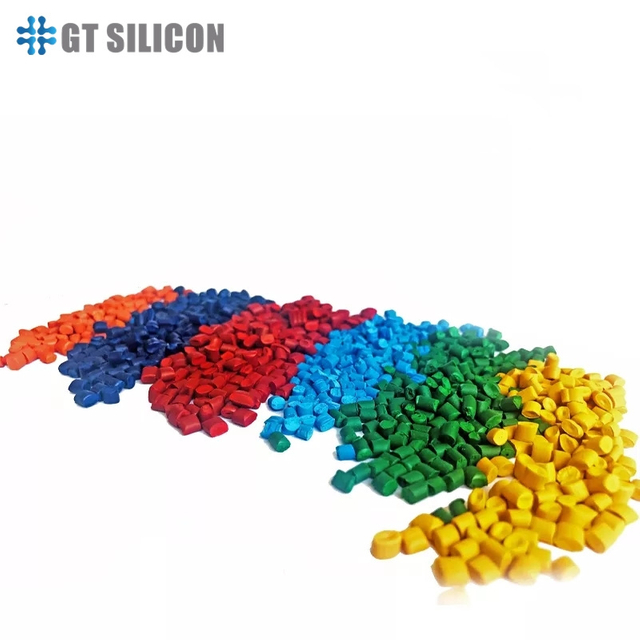
Color selection now overlaps with durability engineering. Outdoor products need UV stability and weatherability. Automotive interiors require resistance to heat, sunlight, scratching, and long-term fading. Packaging may need opacity, migration control, food-contact suitability, or compatibility with recycled resin streams.
Rubber goods, construction materials, fiberglass-reinforced parts, and household products also expose color systems to stress. A formulation that performs well in a short trial may still fail after heat aging, outdoor exposure, or aggressive processing. For this reason, colorant masterbatch evaluation is moving closer to technical validation than simple shade approval.
Trend | Why it matters in 2026 | Most affected applications |
Higher color consistency | Reduces scrap, rework, and customer complaints | Injection molding, extrusion, packaging |
Performance-linked color | Supports UV, heat, and mechanical durability | Automotive, outdoor products, construction |
Recycled resin compatibility | Helps manage variable base color and impurities | Packaging, consumer goods, industrial parts |
Lower-dosage systems | Improves cost control and processing efficiency | High-volume molding, film, rubber processing |
Recycled PE, PP, and other post-consumer or post-industrial materials rarely behave like virgin resin. Base color can shift from batch to batch, impurities may reduce brightness, and melt-flow variation can affect dispersion. A formulation that looks clean in virgin resin may appear dull, gray, or inconsistent when recycled content is introduced.
This makes recycled-resin compatibility a practical test, not a marketing claim. Manufacturers need to check whether the color system can cover base-resin variation without excessive dosing. Processing stability also matters because recycled materials may already have a narrower performance window. A well-designed colorant masterbatch can help maintain appearance, opacity, and production control while supporting recycled-content goals.
Safer pigment selection is becoming more important for consumer goods, food-contact packaging, toys, export products, and applications with strict documentation requirements. Restrictions on hazardous substances, heavy metals, and high-concern additives continue to influence formulation choices. Buyers increasingly ask for technical documents, compliance statements, and evidence that the material fits the intended market.
GT Silicon’s color masterbatch systems can be referenced briefly as an example of this direction because their positioning emphasizes heavy-metal-free composition, recycled-material compatibility, carrier-matrix compatibility, and high-volume production performance. The key point for buyers is not the brand name itself, but the type of criteria such positioning reflects: safer composition, process reliability, and suitability for real manufacturing conditions.
Mono-material packaging is gaining attention because simpler material structures can improve recycling potential. Color, however, still affects sorting, appearance, and reuse value. Dark or poorly detectable colors may create issues in some recycling streams, while excessive additive loading can interfere with material quality.
Recycling expectations increasingly focus on real sorting and recycling conditions rather than theoretical recyclability. For color selection, that means manufacturers should consider detection, dosage, base resin, and end-market requirements before approving a final masterbatch. A sustainable color choice must still process well, meet appearance targets, and avoid creating unnecessary complications in the recycling stream.
Pigment dispersion controls more than shade strength. Fine, uniform dispersion improves opacity, surface finish, gloss stability, and the likelihood that color will remain consistent across production runs. Poor dispersion can create visible specks, fish eyes in film, streaks in molded parts, weak points in thin sections, or uneven appearance in rubber and silicone components.
The risk increases in high-speed processing. Injection molding, extrusion, blow molding, film production, and rubber compounding leave limited time for the color system to melt, distribute, and integrate into the polymer matrix. When dispersion is already optimized inside the pellet, processors can often reduce start-up waste and shorten adjustment time.
A lower let-down ratio can reduce the amount of masterbatch required per production run. That does not automatically mean every concentrated product is better, but it does change the cost calculation. Less material may mean fewer bags handled, less storage space, reduced packaging waste, and less risk of operator dosing error.
High-concentration systems are especially valuable in high-volume production, where small dosage differences become significant over time. GT Silicon’s Additives Master Batch Color Masterbatch Colorant is relevant here because it combines high-performance additives with vibrant colorants for dispersion, coloring efficiency, and enhanced material properties across plastics, rubbers, and synthetic materials. In a neutral editorial context, this type of product positioning fits the broader 2026 move toward efficient coloring rather than simple pigment loading.
Many polymers are processed under heat, pressure, and shear. If the color system cannot tolerate the processing window, the final part may show fading, yellowing, shade drift, or additive degradation. PP, PE, engineering plastics, rubber, and silicone-based materials can each require different temperature and compatibility considerations.
Heat stability also affects repeatability. A color that shifts during long production runs can create subtle differences between early and late batches. Buyers should therefore ask about recommended processing temperature, residence-time sensitivity, and compatibility with the exact base material. For demanding applications, color approval should include production-like trials rather than only lab plaques.
Packaging is often the first point of contact between a product and the buyer, but appearance is not the only technical requirement. Food-contact materials may need migration data and regulatory support. Thin-wall packaging, flexible film, and recycled-content packaging require stable dispersion because even small defects can become highly visible.
Opacity, gloss, surface uniformity, and brand-color consistency also influence purchasing decisions. A poor color match can weaken shelf appeal, while inconsistent opacity can make packaging look cheap or unreliable. For recycled packaging, the formulation must often compensate for base-color variation without excessive additive loading. The best choice is usually a balance between visual strength, compliance needs, processing stability, and recyclability.
Automotive plastics are exposed to heat, sunlight, abrasion, cleaning agents, and long service-life expectations. Interior components may need low gloss, controlled texture, UV resistance, and color stability. Exterior or under-hood components may require stronger heat resistance and weatherability.
Electronics add another layer of complexity. Housings, connectors, panels, and appliance parts may need flame-retardant compatibility, antistatic performance, scratch resistance, or premium surface appearance. A colorant masterbatch used in these sectors cannot be selected only by shade. It must fit the polymer, the processing method, and the safety or durability requirements of the end product.
Construction products such as pipes, profiles, roofing elements, seals, and outdoor fittings need long-term color fastness and resistance to weathering. Rubber goods may face flexing, heat, friction, and chemical exposure. Consumer products, meanwhile, need attractive appearance, safe composition, and consistent color across repeated production batches.
GT Silicon’s product range covers plastics, rubbers, fiberglass, consumer goods, automotive products, and related synthetic materials, which makes it relevant as a quiet example of where broad application coverage can matter. Still, manufacturers should avoid assuming one formulation can serve every end use.
A product that works for a household item may not be suitable for outdoor construction or high-temperature automotive parts.
Application | Main color challenge | Formulation priority | Common processing method |
Flexible packaging | Thin-film defects and opacity variation | Fine dispersion, low contamination, recycled-resin fit | Film extrusion, blown film |
Automotive parts | UV, heat, and scratch exposure | Weatherability, heat stability, functional additives | Injection molding, extrusion |
Electronics | Safety and premium surface finish | Flame-retardant compatibility, antistatic options | Precision molding |
Construction products | Outdoor aging and long service life | UV stability, heat resistance, polymer compatibility | Profile extrusion, pipe extrusion |
Rubber and silicone goods | Flexing, heat, and full-body color | Carrier compatibility, migration control, heat stability | Mixing, molding, extrusion |
Brand owners want color that remains recognizable across regions, suppliers, and production batches. Pantone references, RAL numbers, physical samples, and customer-approved plaques are useful starting points, but manufacturing reality can still change the final appearance. Resin type, surface texture, wall thickness, gloss level, and processing temperature all affect perceived color.
Custom development helps close the gap between design intent and production output. A good supplier should be able to match the target shade, provide trial samples, adjust concentration, and support scale-up. Repeatability matters as much as the first match because the same product may be manufactured across multiple batches or facilities.
A growing number of applications require color and function in the same pellet. UV stabilizers, antioxidants, antistatic agents, flame-retardant-compatible systems, processing aids, gloss modifiers, and strength-supporting additives can all influence final product performance. This trend is especially relevant where manufacturers want to simplify dosing and reduce the number of separate additives on the production floor.
The advantage is not only convenience. Combining compatible functions can improve process control and reduce the chance of additive imbalance. The risk is that every additive interaction must be tested. A functional color system should be validated for appearance, mechanical properties, processing behavior, and end-use performance.
Visual approval alone is too subjective for demanding production. Lighting conditions, surface finish, operator judgment, and sample thickness can all change how a color appears. Spectrophotometer-based measurement provides objective color data and helps teams compare pellets, plaques, films, sheets, and finished parts with greater consistency.
Delta E tolerance, batch records, retained samples, and digital color data help teams identify whether a problem comes from the masterbatch, resin, process settings, or measurement conditions. Broad discussions of sustainability and applications are not enough for serious purchasing decisions. Manufacturers need decision-level guidance around testing, compatibility, dosage, and quality checks. That is where technical purchasing discipline creates real value.
Colorant masterbatch trends in 2026 point toward a more practical standard: stable dispersion, recycled-resin compatibility, lower dosing, application-specific performance, and tighter color control. For manufacturers, the real value is not only a cleaner shade, but fewer production adjustments, more consistent finished parts, and better alignment with durability and compliance needs.
Dongguan Gangtian Polymer Materials Co., Ltd. supports this direction with colorant masterbatch and related polymer material solutions designed for plastics, rubbers, silicone systems, and synthetic materials. The right formulation can help improve processing efficiency, reduce color variation, and make product development more reliable from trial production to scale-up.
A: Colorant masterbatch is used to add consistent color, special effects, or functional properties to plastic products through a carrier resin during processing.
A: Consistent color helps reduce rejected parts, rework, and customer complaints, especially in high-volume molding, extrusion, packaging, and branded consumer products.
A: Key trends include sustainable formulations, recycled-resin compatibility, better pigment dispersion, lower-dosage systems, functional additives, and more application-specific color solutions.
A: Yes. Besides color, masterbatch can include additives for UV resistance, heat stability, antistatic behavior, flame retardancy, processing support, or improved durability.
A: They should match the masterbatch to the base polymer, processing temperature, color target, end-use conditions, regulatory needs, and required dosage before full-scale production.


