
- All
- Product Name
- Product Keyword
- Product Model
- Product Summary
- Product Description
- Multi Field Search


Views: 142 Author: Site Editor Publish Time: 2026-04-25 Origin: Site


When manufacturers, product designers, and sourcing teams ask what silicone rubber is used for, they are usually not looking for a simple textbook definition. They want to understand why this material appears in so many industries and why it continues to be chosen for products that require flexibility, heat resistance, cleanliness, and long-term reliability. In particular, Injection Silicone rubber has become an important material solution because it supports efficient molding, consistent part quality, and complex product design. From medical components and consumer goods to automotive seals and electronic protection parts, silicone rubber solves practical engineering problems that many conventional materials struggle to handle. Its value is not based on one feature alone, but on a balanced combination of thermal stability, elasticity, chemical resistance, and processing adaptability. That is why understanding its real-world uses matters for both technical decision-making and better product development.
Silicone rubber stands out because it can perform in environments where ordinary rubber or plastic may fail. It remains flexible across a broad temperature range, resists aging well, and can maintain stable performance even when exposed to moisture, UV light, or repeated compression. These characteristics make it suitable for applications that demand more than just softness.
Another reason it is widely used is processing versatility. With the development of silicone rubber molding technologies, manufacturers can produce parts with accurate dimensions, repeatable quality, and complex geometries. This makes silicone rubber attractive not only for high-performance applications but also for high-volume production.
In many industries, the decision to use silicone rubber comes from the need to reduce failure risk over time. A component that keeps its shape, sealing ability, and surface stability in tough conditions can offer greater long-term value than a cheaper material that degrades more quickly.
Not all silicone rubber is processed in the same way. Injection Silicone rubber generally refers to silicone materials designed for injection molding processes, especially liquid silicone rubber or closely related systems that can be molded with good precision and productivity.
Compared with some traditional compression-molded materials, injection silicone rubber offers several practical benefits:
· Faster and more repeatable production
· Better suitability for complex part shapes
· Lower labor intensity in many molding operations
· Good consistency for medium- and high-volume manufacturing
· Better control over flash, accuracy, and part uniformity
For manufacturers, this means they can produce components that are small, detailed, soft, heat-resistant, and dimensionally consistent. For buyers and engineers, it means silicone is not only a material choice but also a process advantage when precision and stable output matter.
One of the most important application areas for silicone rubber is the medical field. Medical products often require materials that are soft, chemically stable, clean, and capable of repeated contact with the human body or medical environments.
Injection silicone rubber is commonly used in:
· Medical tubing components
· Respiratory masks and soft interfaces
· Valve parts
· Seals for medical devices
· Wearable healthcare accessories
· Baby care and feeding products in selected applications
The reason silicone performs well here is not just softness. It also offers good thermal resistance, stability under sterilization-related conditions in some grades, and a smooth surface that supports hygiene requirements.
Of course, not all silicone grades are automatically suitable for medical use. Material selection must still match the regulatory and technical needs of the product. But as a category, silicone rubber remains one of the most trusted materials in healthcare-related design.
The automotive industry uses silicone rubber in many areas because vehicles expose parts to heat, vibration, weather, fluids, and long service cycles. A material used in this environment must stay functional without becoming brittle, cracking, or losing elasticity too quickly.
In automotive manufacturing, silicone rubber may be used for:
· Gaskets and seals
· Connector protection parts
· Wire and cable insulation components
· Vibration-damping elements
· Sensor-related protective parts
· Soft molded interfaces exposed to engine heat or outdoor conditions
Automotive components often need both flexibility and stability. Silicone can perform well in high- and low-temperature environments, and it maintains good resistance to weathering compared with many conventional elastomers. This helps reduce failure caused by thermal cycling or environmental exposure.
For this reason, Injection Silicone rubber is often considered when designers need durable molded elastomer parts that must perform reliably over time.
Electronics is another major field where silicone rubber has proven valuable. Many electronic products require insulation, protection, and environmental resistance, especially when components must be shielded from dust, moisture, vibration, or heat.
Silicone rubber is widely used in:
· Keypads and button components
· Protective covers
· Insulating parts
· Connector seals
· LED lighting components
· Cable-related accessories
In these products, silicone offers a useful combination of softness, resilience, and electrical insulation. It can also help maintain performance where heat buildup is a concern. In some designs, its ability to support accurate molding is just as important as its material properties.
As electronic devices become more compact and specialized, the value of precision liquid silicone rubber applications continues to grow. Small molded parts with stable geometry and reliable surface quality are increasingly important in this field.
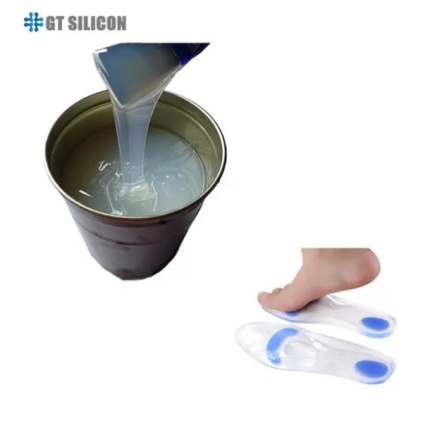
Silicone rubber is not limited to industrial or technical uses. It is also common in everyday consumer goods because it feels soft, performs reliably, and suits products that need repeated use.
Some familiar examples include kitchen tools, bakeware, wearable accessories, personal care products, and protective covers for household devices. These products benefit from silicone’s flexibility, temperature resistance, and pleasant tactile quality.
Product Area | Why Silicone Rubber Is Used | Common Benefit |
Kitchenware | Heat resistance and flexibility | Safer handling and easy release |
Baby products | Soft touch and durability | Comfort and repeated use |
Wearables | Elasticity and skin-friendly feel in suitable grades | Better comfort |
Household accessories | Molding versatility | More design freedom |
Personal care items | Soft texture and stability | Better user experience |
This table shows that silicone is often chosen because it combines function with user comfort. In many consumer products, performance and feel are equally important.
Sealing is one of the most practical and widespread uses of silicone rubber. Wherever a product must prevent leaks, block dust, absorb movement, or maintain a stable interface between two surfaces, silicone often becomes a strong material option.
Sealing applications include:
· O-rings
· Gaskets
· Valve seats
· Waterproof interfaces
· Electrical enclosure seals
· Appliance sealing parts
What makes silicone useful for sealing is its ability to stay elastic over time. A seal that hardens, cracks, or loses compression recovery too quickly will eventually fail. Silicone’s resilience helps extend performance in many of these cases.
This is especially important when the seal is exposed to temperature variation. In systems that cycle between heat and cold, many elastomers lose stability more quickly than silicone. That advantage explains why silicone is so common in appliances, automotive systems, electronics housings, and industrial equipment.
Silicone rubber is used in far more places than many people first realize, from highly technical medical and electronic parts to familiar household and consumer products. What connects these applications is not a single industry, but a recurring need for flexibility, temperature resistance, sealing performance, cleanliness, and long-term material stability. Injection Silicone rubber is especially valuable because it combines these performance benefits with efficient molding possibilities, making it suitable for both precision parts and larger-scale manufacturing programs. The right application depends on matching the silicone grade, the product design, and the production process to the real working conditions rather than relying on assumptions.
From our perspective, this is where experience with material selection and molding practice becomes especially useful. At Dongguan Gangtian Polymer Materials Co., Ltd., we believe silicone solutions should be evaluated based on actual product needs, processing efficiency, and long-term performance, not only on basic material labels. As a company working with polymer materials and application-oriented solutions, we understand that customers often need practical guidance on where silicone fits best and how to choose it responsibly. If you are exploring Injection Silicone rubber for medical, industrial, consumer, or technical product development, you can learn more from Dongguan Gangtian Polymer Materials Co., Ltd. and discuss a suitable direction with us in a professional and straightforward way.
Injection Silicone rubber is commonly used in seals, medical components, electronic parts, kitchenware, baby products, automotive accessories, and many molded industrial parts.
Liquid silicone rubber applications are growing in electronics because silicone provides insulation, flexibility, heat resistance, and precise molding capability for compact and protective components.
Yes. Silicone rubber molding, especially injection-based processes, is often well suited to high-volume production because it can improve consistency, repeatability, and manufacturing efficiency.
Industrial silicone products are often designed for more demanding operating conditions, such as heat, repeated compression, environmental exposure, or long service life requirements.


