
- All
- Product Name
- Product Keyword
- Product Model
- Product Summary
- Product Description
- Multi Field Search


Views: 126 Author: Site Editor Publish Time: 2026-04-30 Origin: Site


Color is often one of the first things customers notice about a silicone part, but for manufacturers and product developers, color is not only about appearance. It can affect brand identity, product differentiation, visibility, cleanliness standards, and even quality control during production. This is especially true in sectors such as consumer goods, electronics, medical accessories, automotive components, and industrial sealing products, where silicone parts are expected to deliver both performance and visual consistency. That is why the question “can you dye silicone rubber” comes up so often. In practice, the answer is yes, but the process is more nuanced than simply applying ordinary dye to the surface. With Injection Silicone rubber, color selection must be considered together with curing behavior, material compatibility, production method, and long-term stability.
Silicone has a very different chemical structure from many ordinary plastics and textiles. Because of that, people often assume it behaves the same way as materials that can be dyed after production using standard coloring methods. In reality, silicone is less porous than fabric and reacts differently from thermoplastics, so the usual idea of “dyeing” does not always apply in the same way.
For most commercial applications, especially those involving Injection Silicone rubber, the preferred approach is not post-production dyeing in the traditional sense. Instead, color is usually introduced during material preparation by adding pigments or color masterbatch before or during molding. This creates more stable, more uniform, and more production-friendly results.
Silicone rubber can be colored, but the most reliable method is usually pigmentation rather than conventional dyeing. That distinction matters.
This usually means applying a coloring agent after the base material already exists, often by soaking, staining, or chemically bonding color onto the surface.
With silicone, especially injection molded grades, color is more often blended into the material itself before curing. This gives the part a full-body color instead of just a surface tint.
That means the practical answer is:
· Yes, silicone rubber can be made in many colors
· Yes, some post-coloring methods exist
· No, ordinary dyeing methods are not always suitable
· Best results usually come from pre-coloring the material during production
This is why manufacturers typically discuss color requirements early in the project rather than treating them as a finishing step.
In industrial production, Injection Silicone rubber is commonly colored by mixing pigments into the silicone compound before molding. This is especially common for liquid silicone rubber and other molding-grade silicone systems.
· pigment paste
· color concentrate
· silicone-compatible masterbatch
· pre-colored silicone compounds
The method used depends on the product application, target color, production volume, and performance requirements.
When the color is fully integrated into the silicone material:
· the shade is more uniform throughout the part
· scratches are less visible than with surface-only coloring
· long-term appearance is often more stable
· repeat production becomes easier to control
· compatibility with molding conditions is better managed
For custom colored silicone parts, this is usually the most efficient route.
This is where the discussion becomes more specific. Silicone can sometimes be colored after molding, but the effectiveness depends on the product, the silicone grade, and the finish required.
· silicone-compatible paints or coatings
· printing or marking methods
· special surface treatment with color layer application
However, post-molding coloring has limitations. It may not provide the same durability as color integrated into the material. In products exposed to friction, repeated bending, washing, chemicals, or outdoor use, surface-applied color may wear or fade faster.
· low-wear decorative parts
· prototype samples
· logo or mark application
· small-batch customization
· products where only surface appearance matters
For most molded industrial components, internal pigmentation remains the more dependable option.
One reason this topic causes confusion is that these three terms are often used interchangeably, even though they are not technically the same.
Method | How It Works | Suitability for Silicone | Typical Result |
Dye | Color penetrates or bonds through a dyeing process | Limited in conventional use | Less common for silicone manufacturing |
Pigment | Color particles are mixed into the material | Highly suitable | Full-body, stable coloration |
Coating/Paint | Color is applied to the outer surface | Conditionally suitable | Surface-only effect |
For Injection Silicone rubber, pigment-based coloration is usually the most practical and scalable choice. Coatings can be useful in specific cases, but they are generally treated as a separate finishing process rather than a substitute for material coloring.
Silicone is valued for flexibility, heat resistance, weather stability, chemical resistance, and softness. Those same advantages can make coloration more technically demanding than with some other materials.
Key challenges include:
· achieving strong adhesion for surface-applied color
· maintaining color consistency across production batches
· avoiding interference with curing chemistry
· preserving mechanical properties after pigment addition
· controlling transparency or translucency when needed
· matching colors accurately under different lighting conditions
This is why color development for liquid silicone rubber coloring is rarely just a cosmetic decision. It also involves formulation and process control.
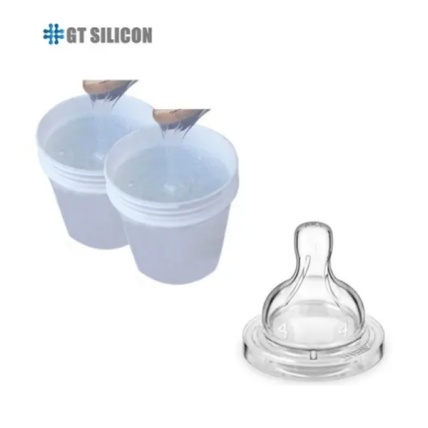
Not every silicone product needs the same kind of color solution. The intended use affects both the material and the colorant choice.
These often prioritize:
· visual appeal
· bright or branded colors
· soft-touch aesthetics
· repeatable batch appearance
These often prioritize:
· stability under heat or chemicals
· simple identification colors
· long-term consistency
· lower contamination risk
These may require:
· carefully selected compliant pigments
· stricter impurity control
· high cleanliness standards
· documented material compatibility
In these applications, choosing the wrong colorant can create performance or compliance issues. That is why Injection Silicone rubber projects usually benefit from early communication about the final use environment.
In many cases, silicone can be colored successfully without major performance loss, but the result depends on how the formulation is handled. Poor pigment selection or excessive loading can affect cure speed, hardness, transparency, and final mechanical behavior.
· change in viscosity during processing
· shift in hardness or elasticity
· altered cure response
· reduced translucency
· different surface appearance
· possible impact on tear strength if formulation is not balanced well
This does not mean colored silicone is unreliable. It simply means the coloring system should be designed for the silicone grade and molding method. A good manufacturer will test color together with processing behavior, not separately.
So, can you dye silicone rubber? In a broad sense, yes, silicone can absolutely be colored. But in practical manufacturing, especially when working with Injection Silicone rubber, the better question is usually not whether it can be dyed, but how the color should be introduced for the most stable and reliable result. For most products, internal pigmentation during material preparation is the preferred route because it offers better uniformity, durability, and process control than ordinary post-production dyeing methods. Surface coloring still has value in certain applications, but it should be chosen with a clear understanding of wear, adhesion, and service conditions. In other words, successful silicone coloration depends less on the idea of “dyeing” in the traditional sense and more on selecting the right coloring system for the product.
From our perspective, the most practical projects are the ones where customers discuss color, performance, and molding requirements together rather than treating color as a separate finishing detail. We have found that this approach reduces trial-and-error, improves batch consistency, and helps the final product look and perform the way it should. For companies exploring colored silicone solutions, custom molding options, or more suitable Injection Silicone rubber material choices, it is worth learning more from Dongguan Gangtian Polymer Materials Co., Ltd. We believe that working with a manufacturer that understands both silicone formulation and production application can make the color selection process much clearer and more dependable.
It can sometimes be surface-colored with silicone-compatible coatings or printing methods, but this is usually less durable than adding color directly into the silicone before molding.
The most common and reliable method is to use silicone-compatible pigments or color concentrates mixed into the material before injection molding.
It can, especially if the formulation is not balanced properly. Pigment choice and dosage may affect cure behavior, hardness, translucency, and processing stability.
For many functional molded parts, yes. Full-body colored silicone generally offers better wear resistance and more consistent appearance over time than surface-painted


